
Hospitals & Healthcare Transportation
Reliable Hospitals & Healthcare Transportation is essential for medical organizations that need safe, scheduled, and well-coordinated passenger movement. Hospitals, clinics, healthcare campuses, rehabilitation centers, outpatient facilities, senior care communities, and medical teams often manage transportation needs that are more complex than standard group travel.
Our Hospital Shuttle Service and Healthcare Bus Rental solutions are designed for scheduled, non-emergency healthcare transportation needs across Washington DC, Maryland, and Virginia. We help healthcare organizations plan reliable shuttle routes for employees, patients, visitors, medical staff, parking areas, campus buildings, off-site facilities, and healthcare events.
Whether your facility needs a daily hospital employee shuttle, a patient and visitor shuttle service, a parking lot shuttle route, an inter-facility shuttle, or healthcare transportation support for a special program, our team can help create a transportation plan that fits your schedule, passenger needs, route requirements, and operational goals.
Request a quote today to plan reliable healthcare transportation for your hospital, clinic, or medical organization.
Scheduled Healthcare Transportation for Non-Emergency Needs
Our service is designed for scheduled, non-emergency transportation and healthcare shuttle needs. This includes hospital shuttles, staff transportation, patient and visitor shuttle service, medical campus transport, healthcare event transportation, and planned group movement.
This is not an ambulance service and is not intended for emergency medical response. For emergencies, patients and healthcare providers should always use proper emergency medical services. Our service is best suited for pre-planned transportation such as hospital employee shuttle service, parking lot shuttles, inter-facility transfers, patient and visitor movement, non-emergency medical appointment transportation, and healthcare training or event travel.
This clarification is important because healthcare transportation must be planned responsibly, with the right vehicle, route, timing, and passenger expectations.
Transportation Challenges Hospitals and Healthcare Facilities Face
Healthcare facilities often operate under constant pressure. Hospitals and clinics must manage staff movement, patient access, visitor flow, parking limitations, campus navigation, and time-sensitive schedules. Transportation issues can create delays, confusion, and stress for both staff and visitors.
Common healthcare transportation challenges include staff parking shortages, shift-based employee movement, patients and visitors struggling to reach entrances from remote parking areas, large campuses with multiple buildings, transfers between clinics or outpatient facilities, and construction-related parking or access changes.
A planned hospital transportation service helps reduce these issues by creating predictable routes, clear pickup points, scheduled shuttle loops, and organized passenger movement. For example, a hospital employee shuttle service can help staff move from remote parking lots to the facility before shift start times. A patient shuttle service can help visitors and patients reach entrances without walking long distances from parking areas. A healthcare campus shuttle service can also help people move between buildings, clinics, labs, parking zones, and outpatient centers.
Healthcare Shuttle Services for Hospitals, Clinics and Medical Organizations
Our healthcare transportation services can support hospitals, clinics, outpatient centers, rehab facilities, therapy centers, senior care communities, assisted living facilities, medical campuses, and healthcare event teams.
A professional healthcare shuttle service can be customized based on the facility’s size, passenger volume, route requirements, schedule, and accessibility needs. Some facilities need daily employee shuttle routes, while others need patient and visitor transportation, parking lot shuttles, campus circulators, or inter-facility transfers.
This service can support:
Hospital staff and employee transportation
Clinic, outpatient, rehab, and senior care transportation
Patient and visitor shuttle service
Healthcare conference and training transportation
Parking lot and campus shuttle routes
Non-emergency scheduled medical transportation
Unlike generic bus rental, healthcare transportation must consider timing, passenger comfort, route clarity, safe pickup/drop-off coordination, and consistent communication.
Hospital and Healthcare Transportation for Every Operational Need
A strong healthcare transportation plan should support different passenger groups and daily operational situations.
A hospital employee shuttle service helps doctors, nurses, technicians, administrative teams, and support workers travel between parking areas, transit hubs, and facility entrances. These routes can be planned around shift start and end times, parking demand, and peak traffic periods.
A patient and visitor shuttle service helps people move between parking lots, hospital entrances, outpatient buildings, clinics, and medical offices. This can improve the experience for patients, families, and visitors, especially on larger campuses.
A hospital parking lot shuttle service connects remote parking areas, garages, overflow lots, and temporary parking locations to hospital entrances. This is useful during construction, high-volume appointment periods, special events, or peak visiting hours.
Healthcare facilities may also need campus circulator shuttles, inter-facility shuttle service, non-emergency medical appointment transportation, construction detour shuttles, and healthcare event or training transportation. These services help maintain access, reduce confusion, and keep movement organized across the facility.
Safety, Accessibility and Passenger Comfort
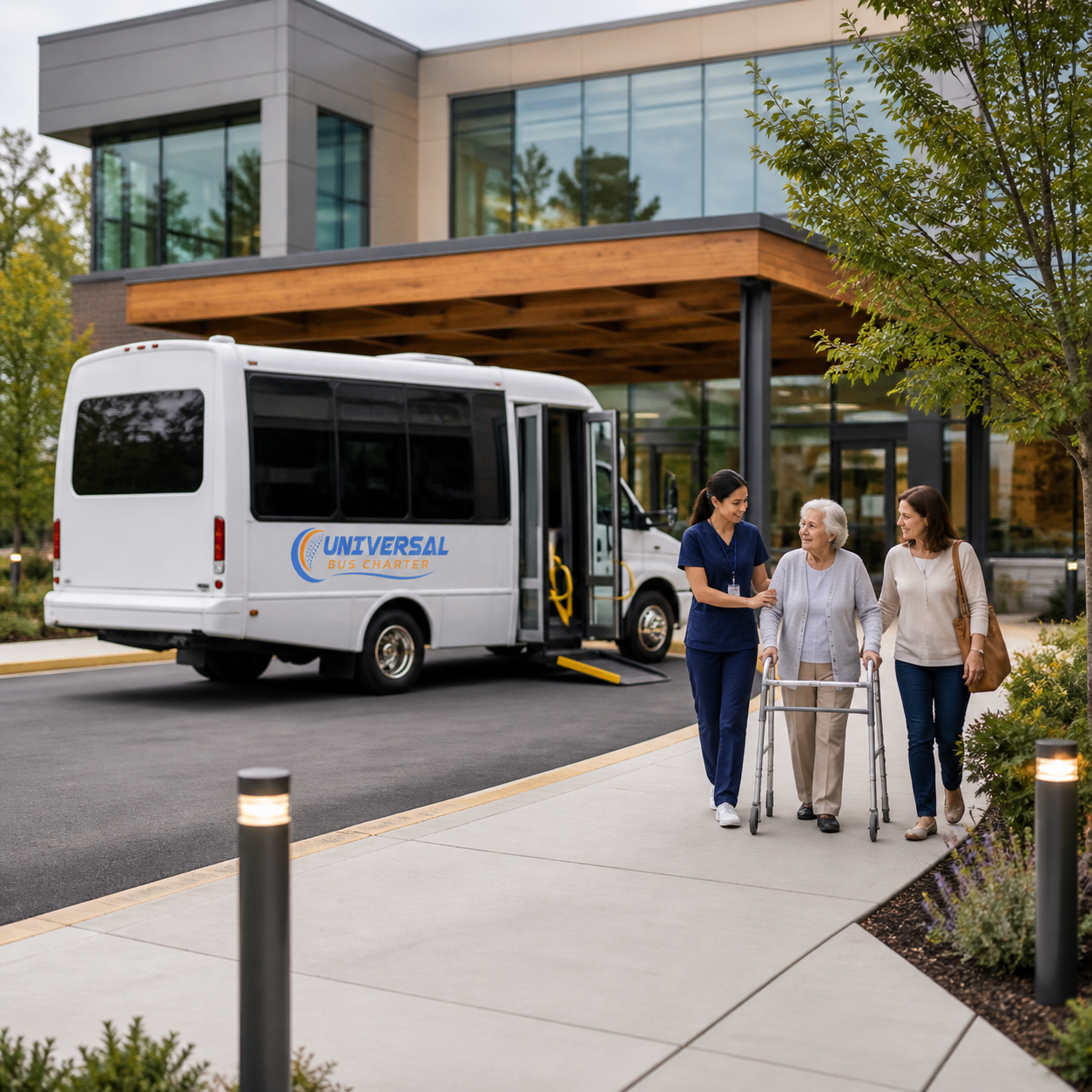
Healthcare transportation requires a careful approach. Passengers may include medical staff, elderly visitors, patients, families, or mobility-sensitive individuals. Safety, cleanliness, accessibility, and comfort should be part of the transportation plan from the beginning.
Professional drivers help maintain route consistency and safe group movement. Pickup and drop-off locations should be planned carefully to reduce confusion around busy hospital entrances, parking areas, and clinic buildings.
Some healthcare transportation needs may require ADA-accessible shuttle service or vehicles that better support mobility-sensitive passengers. Availability may depend on route, vehicle type, and scheduling, so accessibility requirements should be discussed during planning.
Clean, well-maintained vehicles are also important for healthcare-related travel. Depending on the vehicle type, seating, climate control, and space for personal items or small equipment can improve the overall passenger experience.
How Hospital Shuttle Routes and Schedules Are Planned
A reliable hospital shuttle route requires careful planning. Healthcare facilities often operate on fixed schedules, but transportation needs can change throughout the day.
Routes may be planned around staff shift changes, visiting hours, outpatient appointment windows, remote parking lots, multi-building campus loops, traffic conditions, and construction changes. A good route should be easy to understand, realistic in timing, and flexible enough to adjust when facility needs change.
For large hospitals, shuttle loops may connect main buildings, outpatient centers, diagnostic labs, rehab facilities, parking garages, visitor entrances, and administrative offices. For recurring service, daily, weekly, or monthly schedules can be developed based on demand.
Backup route planning is also important. Weather, road closures, campus construction, and traffic changes can affect transportation. A practical shuttle plan should include flexibility so service can continue smoothly.
Fleet Options for Healthcare Bus Rentals and Hospital Shuttles
The right vehicle depends on passenger count, route distance, accessibility needs, schedule frequency, and comfort requirements.
Shuttle vans are useful for small staff groups, clinic routes, executive transfers, and short-distance medical transportation. Minibuses are ideal for recurring staff shuttles, patient and visitor loops, parking lot transfers, and healthcare campus routes.
Coach buses are suitable for larger hospitals, medical conferences, training groups, long-distance staff movement, or inter-facility group travel. If passengers require wheelchair-accessible or mobility-supportive transportation, ADA-accessible shuttle options may be requested where available. Executive transport can also support healthcare leadership, visiting specialists, board members, donors, or professional guests.
Choosing the right vehicle helps improve comfort, manage cost, and ensure that the transportation plan fits the healthcare setting.
Benefits of Professional Hospital Shuttle Services
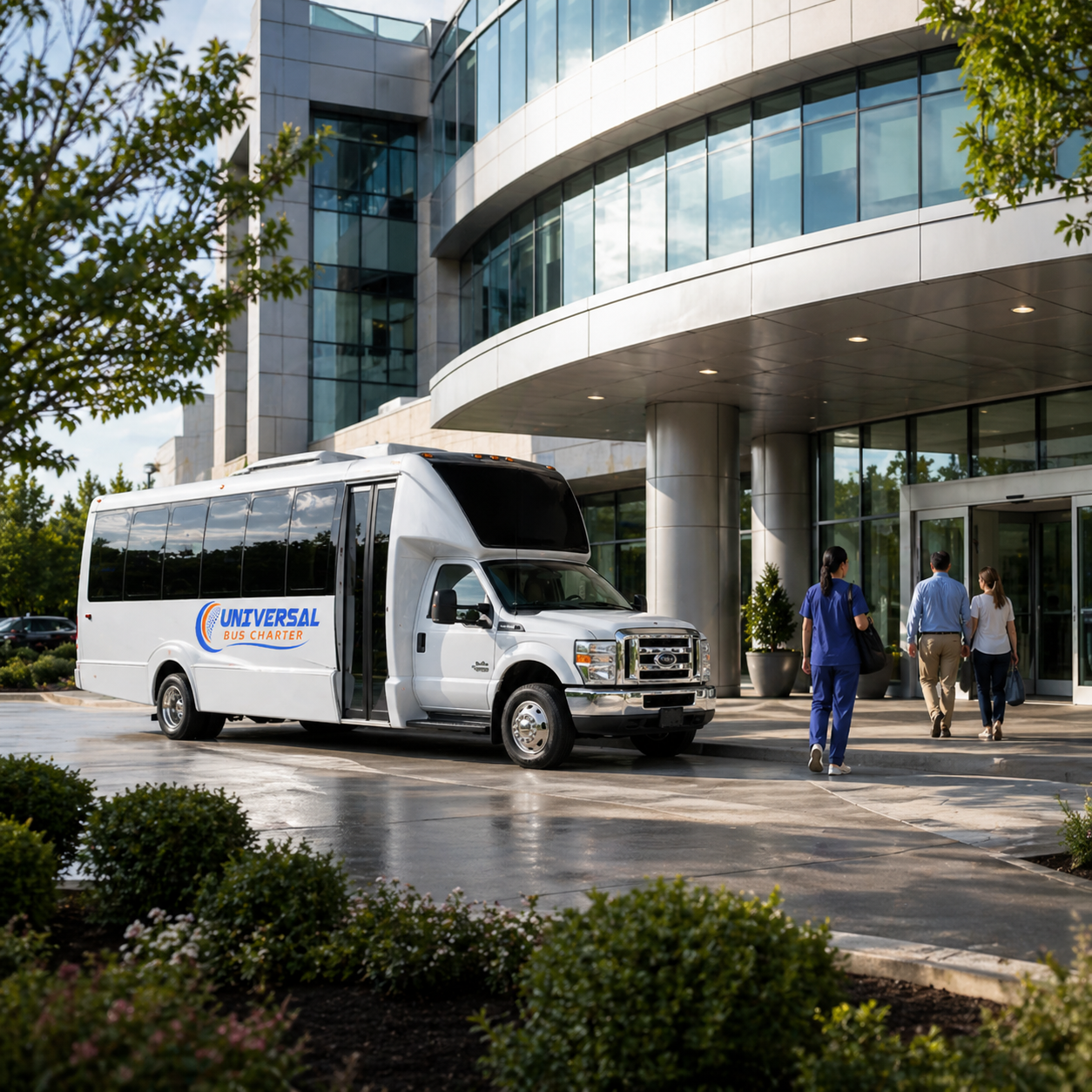
A professional hospital shuttle service can improve access, reduce congestion, and support smoother operations for healthcare organizations.
It can reduce parking congestion by connecting remote lots, overflow parking, and garages to hospital entrances. It can improve staff punctuality by helping employees reach the facility closer to shift start times. It can also support patient and visitor access by reducing long walks from parking areas or confusion around large campuses.
For larger healthcare facilities, a campus shuttle can improve movement between buildings and departments. A planned shuttle system also reduces administrative burden because facility teams do not need to manage transportation issues informally throughout the day.
For hospitals, clinics, and medical organizations with recurring needs, long-term shuttle service provides predictable support for staff, patients, visitors, and facility operations.
How Our Healthcare Transportation Service Works
Our process is designed to make transportation planning easier for healthcare organizations.
First, you share your facility type, passenger group, route needs, pickup points, schedule, service frequency, and any special requirements such as ADA-accessible options or long-distance travel.
Next, we help create a customized shuttle plan based on your needs. This may include vehicle recommendations, pickup/drop-off locations, route planning, timing, and service frequency.
After the plan is reviewed, vehicle type, schedule, route structure, and service details are confirmed. Once service begins, vehicles operate according to the confirmed schedule. Routes can be reviewed and adjusted over time if facility needs change.
Hospital and Healthcare Transportation Cost Factors
The cost of hospital transportation service or healthcare bus rental depends on the service structure and operational requirements. Since every facility has different needs, pricing is usually customized.
Important cost factors include service frequency, route distance, vehicle type, passenger count, number of stops, operating hours, waiting time, accessibility requirements, and whether the service is one-time or recurring.
A short parking lot shuttle route will differ from a multi-building campus circulator or a long-term employee shuttle contract. ADA-accessible vehicle requests, early morning or overnight service, special events, and long-distance healthcare group travel may also affect the quote.
To receive an accurate estimate, healthcare organizations should provide route details, passenger volume, service frequency, pickup/drop-off points, schedule expectations, and accessibility needs.

Hospitals & Healthcare Transportation
We provide healthcare transportation across Washington DC, Maryland, and Virginia, supporting medical organizations, clinics, hospitals, rehab centers, senior care facilities, healthcare campuses, and outpatient facilities.
Service can be planned for Washington DC hospitals and medical offices, Maryland hospital staff shuttle programs, Baltimore healthcare transportation needs, Virginia healthcare shuttle service, Northern Virginia medical campuses, outpatient centers, senior care facilities, rehab centers, medical training venues, and remote parking shuttle points.
Whether your organization needs Hospital Shuttle Service Maryland, Healthcare Bus Rental Virginia, or scheduled healthcare transportation across the DC metro region, a custom transportation plan can support your facility’s needs.
Why Healthcare Organizations Trust Our Transportation Services
Healthcare organizations need transportation that is reliable, clean, punctual, and flexible. A missed shuttle or poorly planned route can affect staff timing, visitor access, and patient experience.
Professional transportation provides punctual service, experienced drivers, clean vehicles, flexible scheduling, group transportation experience, long-term contract support, and responsive communication.
Routes can be planned around shift changes, visiting hours, appointment schedules, facility events, and special requirements. A dependable healthcare shuttle partner helps organizations maintain smoother movement for staff, patients, visitors, and support teams.
Plan Reliable Healthcare Transportation Today
Healthcare transportation requires planning, reliability, and attention to passenger needs. Whether your organization needs a hospital shuttle service, staff transportation, patient and visitor shuttle, parking lot shuttle, campus circulator, or scheduled non-emergency medical transportation, our team can help create a practical transportation plan.
We support hospitals, clinics, medical campuses, rehab centers, senior care facilities, and healthcare organizations across Washington DC, Maryland, and Virginia.
Request a quote today to plan safe, reliable, and organized healthcare transportation for your facility.
Frequently Asked Questions
Hospital shuttle service is scheduled transportation that helps move staff, patients, visitors, or support teams between parking areas, hospital buildings, clinics, campuses, and related healthcare locations.
Yes. Transportation can be arranged for scheduled non-emergency healthcare needs such as medical appointments, outpatient visits, therapy centers, patient/visitor transfers, staff shuttles, and healthcare facility transportation.
No. This is not an ambulance service and is not intended for emergency medical response. For emergencies, patients should use proper emergency medical services.
Yes. Hospital employee shuttle service can be planned for staff parking lots, remote garages, transit hubs, shift changes, and inter-facility movement.
Yes. Patient and visitor shuttle service can support movement between parking areas, hospital entrances, outpatient buildings, clinics, and medical offices.
Yes. Routes can be customized based on facility layout, pickup/drop-off points, shift schedules, visiting hours, traffic conditions, and passenger needs.
Yes. Parking lot shuttle service can connect remote parking areas, garages, overflow lots, and temporary parking locations to hospital entrances or medical buildings.
Vehicle options may include shuttle vans, minibuses, coach buses, executive vehicles, and ADA-accessible shuttle options where available.
ADA-accessible shuttle options may be available depending on route, timing, and vehicle availability. Accessibility needs should be discussed during planning.
Pricing depends on route distance, service frequency, vehicle type, number of passengers, stops, operating hours, waiting time, accessibility requirements, and contract type.
Yes. Long-term shuttle contracts can be arranged for hospitals, clinics, healthcare campuses, and medical organizations that need recurring transportation.
Yes. Healthcare transportation can be arranged across Washington DC, Maryland, Virginia, Baltimore, Northern Virginia, and nearby healthcare regions.